An interview by Luana Pleșea
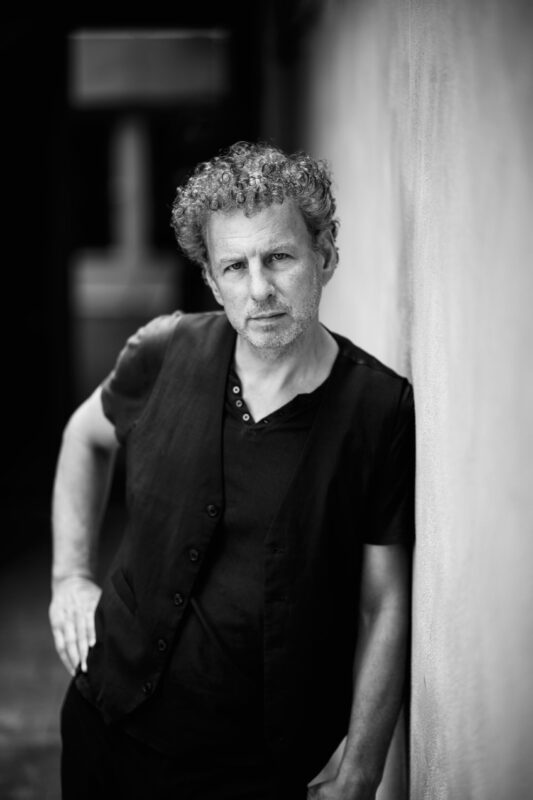
Belgian choreographer, dancer and director, founder of the internationally renowned Ultima Vez company, Wim Vandekeybus is coming to the Sibiu International Theatre Festival for the first time. After his revolutionary debut with the show What the Body Does Not Remember (1987), rewarded with a Bessie Award in New York, he has become one of the essential figures of contemporary dance.
His company, Ultima Vez, is based in Molenbeek-Saint-Jean (Brussels). Together with Jan Fabre, Alain Platel and Anne Teresa De Keersmaeker, Wim Vandekeybus was responsible for the Flemish Wave in contemporary dance in the 1980s. He has made over thirty international dance and theatre productions and almost as many films and video works.
Belgian choreographer and director Wim Vandekeybus will receive a star on the Sibiu Walk of Fame this year.
Dear Wim Vandekeybus, I was thinking about the almost 40 years of activity with the Ultima Vez company. How would you describe these almost 40 years in just, I don’t know, maybe a few words?
It’s difficult. It’s like, yeah, it was like a rollercoaster that never stops or something. Like sometimes people say how it’s possible you don’t burn out or get tired.
And I think it’s because I always try to find new things that I don’t follow in a kind of routine. I made more than 45 shows. Like now, just last week I finished Carmen, my first opera.
It’s very late, but then a lot of knowledge comes together. I made also a lot of films, also filmed in Constanza and in Budapest, a feature film. So I’m always trying to renew myself, but I clearly find now I have a language that is still based on my first works.
And it grew more with text, with singing, with music, with film. And it’s funny because we have this anniversary next year where we’re going to exist 40 years. I was 23 when we did the premiere of What the Body Does Not Remember – Revival, direction and choreography Wim Vandekeybus – Paris. And we are now rehearsing. Next week we have the premiere again of What the Body… with a new cast where nobody was born when it was made. And with L’Ensemble Intercontemporain, one of the biggest ensembles in Paris, in the Philharmonie.
So we play with the music of Thierry De Mey, who recomposed some scenes and also two new extra scenes where I jump back in time to the time now, where I said, ah, I have a little section, we freeze and then we move like we move now for five minutes and then we go on. So it’s a bit of a historical overview. And how I see my celebration year, yeah, it changed a lot.
I have only my photographer and my costume designer who was from the beginning. So we are only three people from the beginning. All the rest of the people is new people.
And some worked a lot with me, like Christine, who was my manager for more than 30 years. She works in the Royal Flemish Theatre now. We have very good connection.
But it’s such a huge community of people. Like I had more than 30 companies and all people with who I spent time, with who I travelled, with who I worked. But I don’t stay sticking with the same. I went and got new people. I put my energy in the new people. And that’s a bit how it can continue. If not, you burnout and you stop, I think.
So how do you feel after this almost 40 years with Ultima Vez?
I think in the beginning, I was lucky maybe that I worked with Jan Fabre as a dancer, as a performer, Jan Fabre, in The Power of Theatrical Madness. And I started my own company, but I never studied dance, neither film, neither theater, a bit of theater. And it came a bit like, I want to do something.
And in fact, it was What the Body Does Not Remember, was immediately a kind of language where the instinct and the reflex is so important in the movement, that the movement had the necessity to exist there, not out of lyricism or beauty of this or that. And of course, it shifted, we don’t continue to throw bricks and so, but we still do it. But we have also other shows, we work with emotion, with mythology, with the memory of the body, you know, how characters, how we can inspire ourselves on mythological characters, and to rewrite them for the contemporary.
And that’s why also, I’m very happy to come, because I think that Sibiu is more a theater festival. And I’m very happy to come with a show who has a lot of theatrical elements. And where we have a lot of text, we have actors in the movie who talk, who do, it will be subtitled.
But I think it’s interesting to come with something theatrical, where the dance is used in a theatrical way. Like my dance never has been formal or conceptual. It was always in function of something theatrical, something inner that expressed itself.
It was it followed the rules of the theater of the catharsis of the drama of the emotional language. And I still like that. Because when you do film, and so when you direct now I did singers in opera, it’s also they have to move that it fits with the content of what they sing.
Of course, there are many possibilities. Some people can be very cold, cool, and I choose mostly for the involvement for the engagement for the expression in a theatrical way. So I’m not afraid of something dramatical, but in a clever way in a very action driven way.
While in fact, if we see now in the 80s, we changed a lot of things that dance could be theater could be film could be non professional could be not non classical. We changed that rules and a lot of people started to be influenced by it. Of course, I planted the tree in the desert, you know, it was much less companies now there are 1000s of companies and this and that.
And, of course, there is money problems. And, but there’s so much now that it’s different than a lot of things are formal and interesting also, but my language was a different thing. And it changed the dance and even Yeah, I think if you do what the others do, you disappear in the crowd.
And I think Ultima Vez has always been something of it’s a bit different, you know, even if we go to the classical institutions like the Philharmonic, or the opera, let’s say, I’m going back again in time talking about the past.
I discovered a few days ago, your first book about you as choreographer and the company Ultima Vez. I know there are 10 years ago, it happened.
Yeah, the Rates of Staging.
Yes. So about this, maybe some very strong things for you, which you put in this book of yours.
Well, for me, in the beginning, it was very important. Yeah, the meeting with my first people, like I was not predestinated to make a company, you know, like the producers, and so they were who’s this guy, you know, and then suddenly, one of them produced us. And then suddenly, I had other people who followed and we went to New York, and we won the best award of the best show in New York.
Also, with the second show, we saw one too busy work. And a lot of my work was in the beginning based on meetings with people like I met this old man, who in Germany, Carlo Verano, and we made three shows about his stories. I was filming him in Super 8, and always the same lies.
So also, when he passed away, we still did a theater show with his character played by two actors. And one girl was playing all the women in his life. And a dancer was playing the hamster he had in his house.
So very weird show. And it was a very important meeting. Then another meeting was, I think, the meeting with Saeed Karbi, who is a blind dancer, I was not a dancer, a blind person, and I made the show, her body doesn’t fit her soul.
About blind people with two blind people on the stage of 10. And Saeed stayed in the company, he made like six, seven shows, even when it was not about blindness, he was part of the company. I went to Morocco to film with him, which was mountains made of barking.
So about hallucinations in the desert, and so and we made films and then came back, and then built around the film that we shot in Morocco, a show, a dance show, very strong. Other meetings are maybe also I started very late to work for other companies like I worked for ITA, International Theater Amsterdam for Ivo van Hoof, and we made Sonic Boom, where I met this super actors who were already retired, that they say I want to work with them. And they were next to dancers.
And so later I met also a theater director who did 150 shows in all the continents. And I put him again in the scene with the Herod mythology that we did about the killing of the infant. So I think a lot of this in the book is a lot of meetings with people who led true shows.
Now it’s a bit less that this idea, because I work more sometimes with existing things. I have Jerry Killick, also one of my actors, amazing actor who did four or five shows, who was also in Galloping Mind, one of the main characters, the film I shot in Hungary and Romania. And yeah, it’s difficult to say what’s special in the book, of course, my personal relationship with Charles Calvo, who, where I have a son with Fernando, but who was also a filmmaker, but she became one of the sound designers, very important, you know, she was first dancing with us, then studied sound design and is a composer.
She worked with Jan Faber, with so many other people, she did all the sound designs of my film. And I think it’s important this meeting, even sometimes if it’s personal, but to meet people who get part of your traject, who have their own traject themselves as a creator and who crosses. So it’s more these collaborations who are very important, I think.
© Filip Claessens