An actor, director, playwright, and producer of Portuguese origin, Tiago Rodrigues is one of the most original voices in the theatre worldwide. In 1997, at the age of twenty, he began collaborating with the Belgian actors’ collective, the tg STAN company. This encounter marked his career, as he was pleasantly impressed by the freedom of expression and the lack of hierarchy within the group. It was here that he developed his acting style and his talent for writing dramatic texts. In 2003, he co-founded the theatre company Mundo Perfeito with Magda Bizarro, and in 2014, he was appointed artistic director of the Dona Maria II National Theatre in Lisbon.
For his rich cultural activity, he received the Europe Prize for Theatrical Realities in 2018, the title of Knight of the Order of Arts and Letters from the French state in 2019, and from the Portuguese state, the Pessoa Prize, the most prestigious distinction for arts and sciences in Portugal.
Since 2022, he has been the director of the Avignon Festival (France) and an important promoter of building bridges between cities and communities through theatre.
Anda Ionaș: As an artist, you have a successful international career, and since 2022 you have been the director of the Avignon Theatre Festival. What are your thoughts about this new challenge, knowing that administrative responsibilities reduce the time dedicated to creation?
Tiago Rodrigues: I think the decision to work for the Avignon Festival is linked to its mission, which goes beyond my desire to make theatre shows. It’s a need to contribute to the creation of others and to make it accessible to the public. In this sense, when I started working as the artistic director of the Dona Maria II National Theatre in Lisbon, or later, here at the Avignon Festival, I made a commitment to put myself at the service of culture, of artistic creation, of theatre, to be closer to people, to society. Of course, an artist can do all this through their shows, but to work for a cultural organization, and especially for a festival of the importance of Avignon, means to push your contribution even further. That is my motivation for working at this festival, and then the chance, the honour, and the responsibility of being able to defend its public service mission, which I consider very important, not only for France but also for Europe and the entire world.
AI: What do you believe is the importance of cultural diplomacy in today’s world?
TR: In a world where we see more and more examples of closure, tension, and conflict, culture is very important, being a binder (a bridge) between peoples, cultures, and languages, in defence of the diversity of worldviews. Different perceptions of the world mean richness, not problems. To see the world differently, as for example, the Romanian, Portuguese, or French people might see it, means richness, if you manage to create a dialogue. Culture allows us to discover through theatre or other arts the vision of others, the common denominator of humanity, and also the struggles of the human condition.
In this sense, I believe that cultural diplomacy has the power to bring people together beyond their differences. Through international festivals like the one in Avignon or Sibiu, we discover the effort being made all over the world, an effort of cultural, mental, and human rapprochement, despite geographical distances. This rapprochement is made not only through what is identical but also through what is different, through curiosity, through the desire not just to respect difference, but to actually love it.
AI: You have spoken in numerous interviews about divergent thinking, moving out of the established space of the theatre and towards the community… What do you think is the role of theatre today? Should it have a more prominent social role?
TR: First of all, I must say that theatre has no obligation to have a role. Theatre IS, it is part of the human experience, of the adventure of being alive. Artistic creation, theatre, would exist even under a dictatorship, even in prison, even deprived of fundamental rights and freedoms. Theatre would still exist. I believe that if there is a role for theatre, it doesn’t mean that artists must make a certain type of theatre to fulfil a role, but that society should first create the means for artists to be able to work, and then, for as many people as possible to have access to artistic creation. Starting from this, it is true that theatre can have an educational role, broaden people’s horizons and knowledge of the world, promote debate, dialogue, and awaken sensitivity.
It can therefore have multiple roles that traverse the life of a human being and a society; it can be the centre of democracy. But for all these roles to be fulfilled, there is a primordial condition: that of not demanding that theatre conform to certain expectations. It must be free, it must surprise us, show us things we do not understand, it must research, and it must also be supported by financial and human means. A society has a duty to support artistic creation as a guarantee that it is not reserved only for a rich minority, for people who can access education, but is in the public service, being financed as it should be in a democracy. Then there is also a need for mediation, for cultural organizations, theatres, festivals, which do the work of discovering new aesthetics so that theatre can renew itself and the audience along with it.

AI: The theatre you create is generally based on texts you have written yourself, which often start from a biographical note, a true story, a document… Do you consider theatre to be more authentic when the creator (actor, director) is emotionally involved?
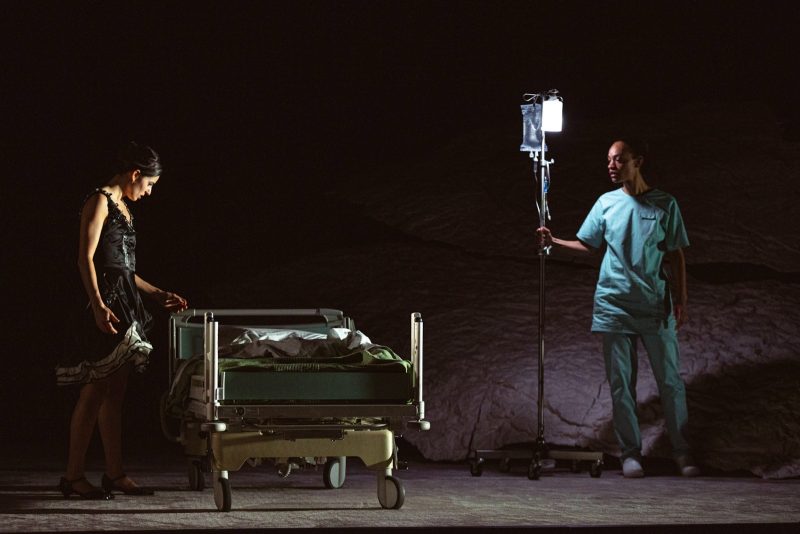
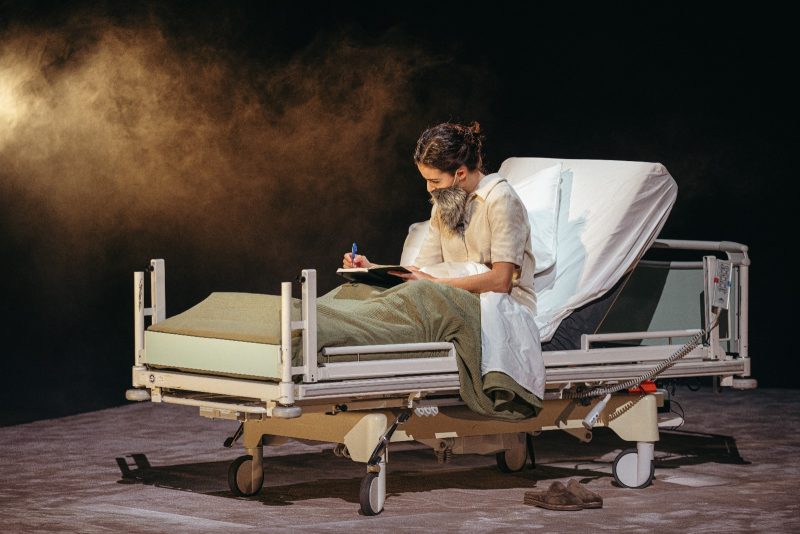
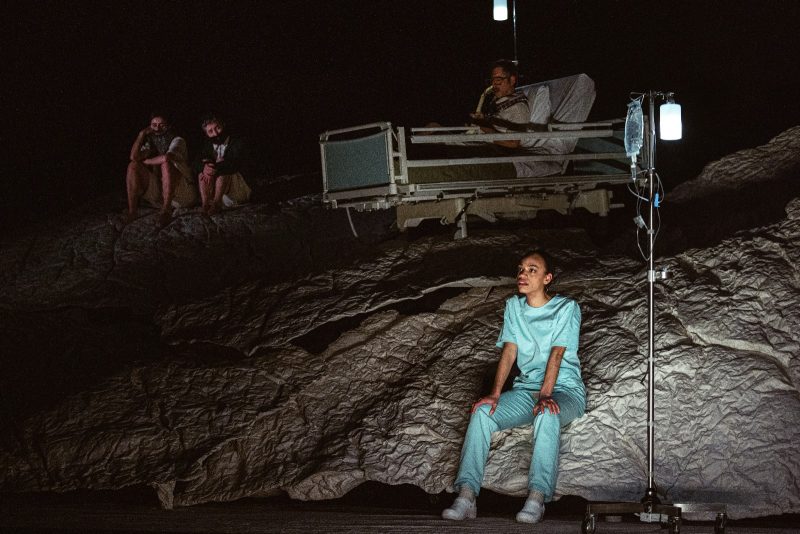
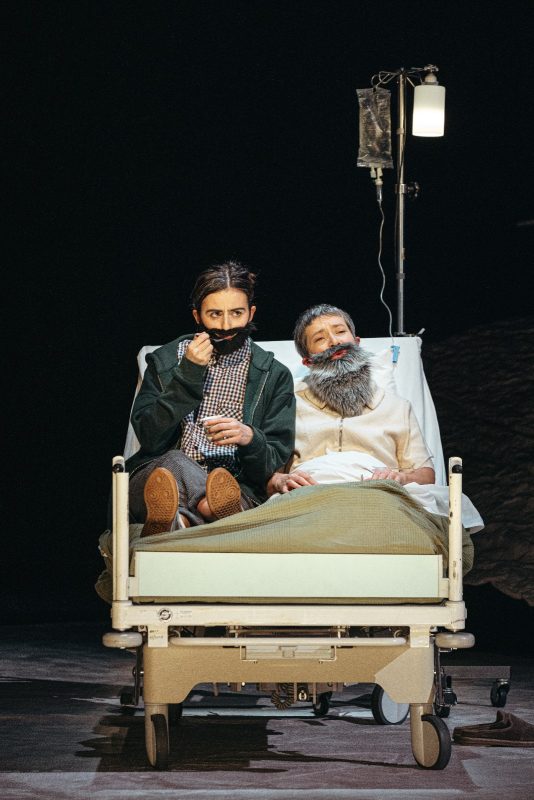
TR: I believe that all theatre always speaks about personal experiences, it always starts from reality. In certain plays, this relationship to the real can be more or less explicit. For example, in the show “No Yogurt for the Dead,” which will be presented at FITS 2025, I talk about an autobiographical episode, the death of my father, but I don’t think the play is more true or more legitimate or more personal than a work of fiction written by someone else. I believe that theatre always offers the possibility of personal expression within a collective, and this collective also commits itself personally. Theatre is not just the expression of an individual, even if there is an author, a director, but it is made collectively.
Every play always contains something from people’s lives. For example, in the oldest known ancient tragedy, The Persians by Aeschylus, the Persians are presented in an absolute exercise of fiction. Aeschylus imagines the defeated in war, the others, and presents them to the Athenian public. They are different people, with a different worldview. About ten years earlier, Aeschylus had participated in the war against the Persians on the side of the victors, but he decides to present the story of the vanquished in Athens, in order to understand them, to put himself in their place.
There is as much fiction there as there is documentary theatre. In theatre, I believe reality is always very present, because the audience is present. It’s a human assembly, participating in something that is about to happen. It’s not about a projection, like in cinema, about something already made, which will always be reproduced in the same way. Each performance has its own reality and that makes everything very personal, because it is a unique experience between the artists and the audience and it will never be repeated.
AI: But when you choose to stage well-known, classic stories, such as Hecuba, Antony and Cleopatra, The Cherry Orchard, etc., what are the elements you are looking for?
TR: In these texts, there must already be a personal dimension. Let’s say I have to recognize in a text the expression of a deep feeling that belongs to me, which I can find in an episode of my life or in an event I observed, in which I participated and which I wish to describe; to have been personally touched or shaken by a work, by its ideas. Then, there must also be the possibility of learning something. A new project is also a way to learn more about subjects that interest me and that I want to understand better (about politics, gastronomy, medicine), to have more information to reflect on and to share questions. A third criterion would be to find in a play or a source material—be it Euripides’ Hecuba, Flaubert’s Madame Bovary, or Chekhov’s The Cherry Orchard—questions about the world that are brilliantly formulated, because the theatre that interests me is the theatre that raises questions for the audience.
AI: Do you also involve the actors in the writing of the text? Is it a collaborative process?
TR: Yes. I write during rehearsals, starting from conversations and debates with the actors, I also keep their questions, I spend a lot of time around the table with the whole team, even with the technicians and producers. In the first days of rehearsal for a new project, I might imagine something, but during the rehearsals, I seek to build a collective, shared imagination.
AI: But for the texts that are inspired by personal experiences, like “No Yogurt for the Dead,” where do you find the strength to confront such painful subjects, to relive them through theatre? Many would shy away from opening old wounds… Is there a cathartic effect in this?
TR: In my experience, wounds become less painful when they are treated through theatre. I believe that theatre has this power to console, to repair, to soothe, as it happens in the case of the performance “No Yogurt for the Dead,” in which theatre comes against death, it is a way of saying that something that death has interrupted can continue through theatre.
Translation: Ana Blanca Ciocoi-Pop, Cover photo: Tiago Rodrigues, by Michiel Devijver


