What do you think are the successes of the Timisoara European Capital of Culture programme and what aspects would you have liked to have been better articulated?
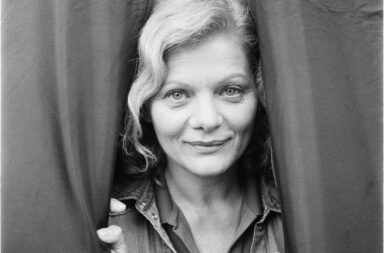
Cristian Blidariu, associate professor and dean of the Faculty of Architecture and Urban Planning, Polytechnic University of Timișoara
In the context that things have been done in the last moment, and there have been a lot of changes in the way the program has been managed in the last five years, I would say that the biggest gain, from my point of view, and I think also from the institution I represent, is that we had a dialogue partner on the funding area, the one that the city hall implemented in the year before the capital and that worked quite well: Timisoara Project Centre. I don’t know how many cities in the country currently have this kind of an authorising officer and an institution that not only gives money, but also selects projects, based on quite ok criteria, in my opinion.
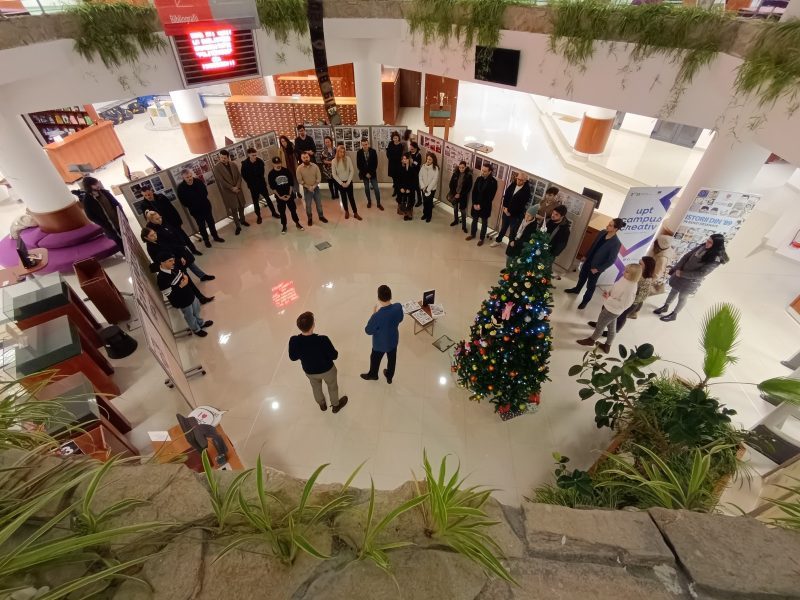
For example, we as a university applied to one of the centre’s calls in March. It was a surprise even for us that we managed to get full marks for funding. This allowed not only the university, but also the faculty, to do projects that otherwise they would never have been able to develop, probably in another format or in relation to other institutions, because until now things have moved quite slowly in the relationship between institutions, such as the university with the City Hall or the County Council. I think it has been an excellent partner in that respect. The project that we, the university, did is called Campus Creativ. It’s a project that basically puts the polytechnic campus in the foreground. This year we celebrated the 100th anniversary of the first building, so we also had an anniversary moment.
The project was written by my colleagues from the marketing and communication department at the university. They are all very young, but superbly well-intentioned, with a lot of energy, and this made a difference, because they wrote the project quite quickly and agreed to work on it and other projects, which they might not have had the chance to submit at that time, such as, for example, the project we did as a faculty, the Festival of Romanian Schools of Architecture, a project run in partnership with UAR. In fact UAR was the initiator at the first edition and it ended up in a format where UAR put a third of the budget. Through Campus Creativ another third of the budget was secured and another third came from sponsorships from various partners. It’s the kind of meeting that we probably couldn’t have imagined otherwise, even within the university, between a faculty and a department, applying together for some public funds, winning them and then implementing them successfully, as in our case it was an architecture festival.
Many of my colleagues in college, who have applied in various other settings with foundations, NGOs that they work with, have won funding for their projects, also from the centre, and have done some great projects. I think in our faculty alone I could count 4-5 projects of which ours is indeed institutionally implemented. The rest, through people in the faculty, but who applied with other partners and managed to implement them very well. So, a kind of ecosystem has been created and I think that knowledge has been gained in this area of applications. It’s been applying to the Project Centre for two years now, if I’m not mistaken, and somehow there has been some sort of exercise. So people kind of already knew how to work in relation to the Project Centre, but during 2023 there was a very good sense of its presence and the opportunities it opened up.
Otherwise, I make no secret of the fact that I had zero hope that anything would happen in the cultural capital, because it seemed to me that everything was politically monopolised and impossible to access. So I’m glad the process of awarding money has been standardised. I know that the County Council also awarded funding through their own centre, although I don’t think they have an autonomous structure. There was some kind of political competition between the City and the County Council, which I think was quite obvious to everyone. The County Council has clearly had an advantage in terms of the kind of projects it has brought in: projects with a greater addressability, import projects, prestige projects. They built their agenda, a little bit differently from the Project Centre, which I thought focused more on local, regional, national actors, and gave a chance to those who are in the field to develop projects, to create interesting things. Timis County Council went more for imported products. Everything from exhibitions to shows were prestigious projects, with great symbolic capital… The effect is yet to be seen. Probably at the level of cultural consumers, what they did had quite an impact, but I don’t know how well they actually managed to develop networks. For me these are much more important, the community of producers in the cultural area.
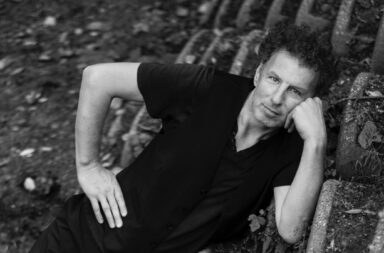
Claudiu T. Arieșan, associate professor of the Faculty of Letters, Philosophy and History, West University, Timișoara
First of all we have to take into account that the European Capital of Culture was supposed to be in 2021. It was postponed because of health conditions, all over the planet, many projects being out of the question at the time. So 2023, fortuitously, became what eventually became the triumph of a project that “overcame” Bucharest, Cluj, Craiova and other very important Romanian cities. I believe that the victory lies in the desire to respect the logo, which was a modest one, I might say, in the humble sense, rather, starting from the fact that a certain spirit of Timișoara, recognizable during the Revolution and in the years afterwards, marked the history of Romania, but in the course of time it faded, or even disappeared from certain environments. It sought to be revived through this project, which, in Romanian, has a very simple motto: “Light up the city through you!”. The English version of the winning bidbook, which I also worked on, has two very clear moments: “Shine your light – Light up your city!”. So light up your own light inside, in your soul, in your heart, through your capacities and possibilities and then, by summing up these individual lights, light up your city!
The successes are many, and they are rather individual projects, we must admit. At Timis County Council level, especially Mr Alin Nica, has come up with some very bold projects, namely bringing a Constantin Brancusi exhibition to Timisoara, 50 years after the previous one, and then a premiere exhibition of Victor Brauner, two exceptional artists. Not to mention the numerous concerts, festivals, meetings and conferences, symposia, which have mobilized the life of the city. There are days when there are 10 to 12, even 20 events almost simultaneously.
The less successful parts are rather related to very punctual projects, those that sought a not very precise target audience, through the city’s neighbourhoods, in less populated areas, or at the confluence of several artistic or cultural sensibilities. They had a limited audience and their memory faded rather quickly. Also, with the exception of the extraordinary road network that was built from Timișoara to the motorway, also by the County Council, there was a lack of major infrastructure projects, which in the case of Sibiu marked this cultural capital. But let’s not discourage, after all, the most important word in this bidbook, in the specifications of the European Capital, is cultural heritage. Not everything has to happen this year. We expect that in the years to come, some of the projects that have now been started, some of the events that Art Encounters, or the Jecza Galleries, or the Banat Art Museum have initiated, will bear fruit.
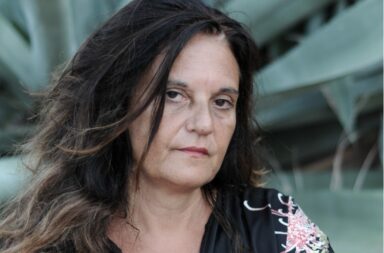
Andi Daiszler, President of the Daisler Association
I think everything was as well organized as it could have been, given the political clinics, the fact that for years the program could not be implemented for various reasons, which I think the local ecosystem knows best. The programme I met in Timisoara seemed to me to be varied, rich, and to respond to the most varied expectations from as many groups of the public as possible. It seemed to me that there was a lack of investment in the cultural infrastructure at times, and I think everyone felt this. Timisoara has only this year regained one or two of the city’s legendary cinemas, these being the only infrastructure investments that have been made since winning the title in 2016 and to date. It still doesn’t have a multi-purpose hall and doesn’t have a larger capacity auditorium, a shortfall that I think in the past seven years could have been corrected, but I understand that it’s the political wrangling that has stood in the way of these investments. I would commend the efforts of local operators to present themselves to the public in a much more professional manner than has been the case so far, to collaborate more with each other, to reach out more to the public. Obviously everyone started this project, I think, with the best of intentions, or so I would like to think, except that along the way politics intervened, human egos intervened and this is the result in the end.
Ionel Mărginean, Executive Director of Diogene Cultural Association
Universities and public institutions have become much more interested in culture and cultural tools that they could use on a regular basis. An appetite for new cultural events has been created even for economic operators. It is much easier to argue why a place that is not part of the cultural infrastructure and belongs to a company or institution could host events. The question is much more likely to be asked in entities that do not have culture as their main object of activity: “But what do we do for culture? “
It has become a necessity to do something outside the centre as well. Even if they don’t yet produce anything specific in the neighbourhoods, the question most often raised in public and private organisations in culture is: „What about what we do in the neighbourhoods?“ The city has taken on a new, fresh image, but one that is not disconnected from the brand of the Revolution. Artists praise the openness and opportunities in the city, and some are even moving in. Artists and major cultural institutions in Romania have asked the question, „What are we doing in Timisoara?“
The cultural environment in Timisoara has become more professional, it has become very interconnected. Interesting partnerships have been created in terms of the typology of organisations and have had unexpectedly good results and follow-ups. At the same time there was a great infusion of know-how from partners and artists coming from outside, know-how that was well absorbed in long-lasting collaborations. The question was, “But who else are we working with?” A diagram of collaborations (connecting lines) between different people (nodes) working in the cultural sector would be interesting.
How transparent and judicious do you think the allocation of public funds for the programme was?
Cristian Blidariu, associate professor and dean of the Faculty of Architecture and Urban Planning, Polytechnic University of Timișoara
The institution I represent has received public funding through the Project Centre. So far the relationship has been as fair as possible. We have had full support for the project we have developed. I am not aware of any transparency problems, at least with the partners I have worked with. I can’t say anything about the other player in the market, the County Council, because I haven’t worked with them, but my direct experience is positive. I have nothing to reproach anyone for in this area. So, I would say I had a good experience overall.
Claudiu T. Arieșan, associate professor of the Faculty of Letters, Philosophy and History, West University, Timișoara
From the outset, it must be said that the funds allocated have not always been visible to ordinary citizens. There were three different sources: the City Hall, the County Council and, most importantly, the Ministry of Culture. We have to admit that there have been syncopations on the part of the Ministry, which only in recent months has given extra speed to the allocation of direct funds, and the authorising structures over the years have been very different, with the management team that originally won the project changing in the meantime. So we cannot conclude either way. There have been funds, certainly not enough, and we certainly can’t talk about a presentation with cards on the table of all these investments.
Andi Daiszler, President of the Daisler Association
We submitted projects for calls and won three of them. It was the first time that external evaluators were used, I think, at the national level, i.e. the people who judged the projects were not from the City Hall, nor from the County Council, but evaluators from different cities in the country, who had no way of knowing the projects or the cultural operators who submitted them. I found this way of scoring and judging extremely beneficial compared to other ways I have come across. I am from Cluj and in Cluj cultural projects are judged by City Hall employees. Here, independent evaluators have been contracted. I saw a list of about 40 evaluators for each grant and they were not all the same. I think it would be a very good idea for someone from Iasi or Slobozia to check the projects submitted in Timisoara. This certifies an increased degree of independence and transparency.
Ionel Mărginean, Executive Director of Diogene Cultural Association
Part of the funds came through competitions with juried projects. The funds went to the cultural operators who won the competitions and there was never a question of them having to use a particular distributor or service provider. In terms of transparency, I think we have reached an ok level. On the question of prudence… Chibustice is not a factor that contributes to innovation, and one should also take risks with uncertified/untested programs or operators. Of course, one can comment that “they should have looked at… and ask … and program..”, but at the volume of contracts and calls, it’s fine as it happened. It was a quantitative leap that produces effects, a qualitative leap, even with one-off mini-failures.
Another part of the funds came directly through cultural institutions. I can’t say how transparent or judicious the allocation was, because I haven’t been watching, but it would be very interesting to have an account of these funds: how much was allocated, how much was consumed, what was produced and what the results are.
This journalistic material was made possible by a grant from Energie! Creative Fellowships, granted by the Municipality of Timișoara, through the Project Centre, within the Power Station component of the National Cultural Programme “Timișoara – European Capital of Culture in 2023”. The material does not necessarily represent the position of the Timisoara City Projects Centre and the Centre is not responsible for its content or how it may be used.
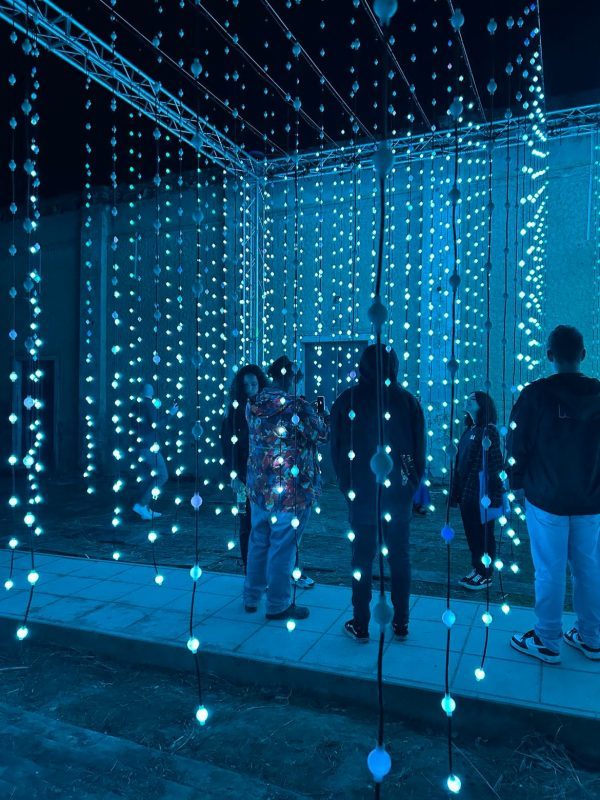
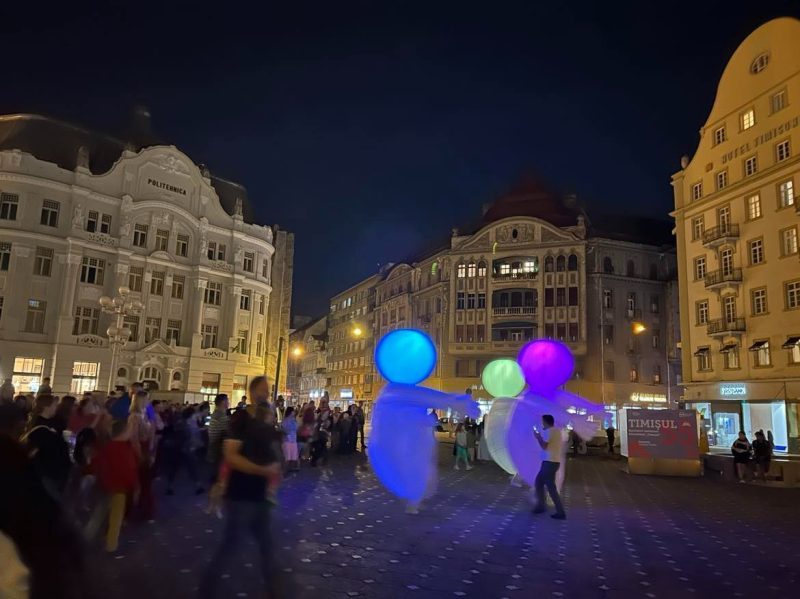
Photo cover: Lights on Romania, Daiszler Association