How well do you think the programme events have been promoted?
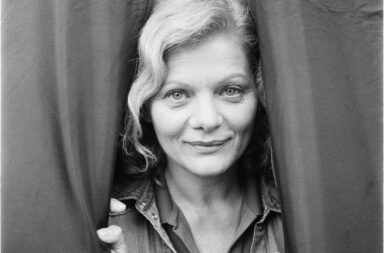
Cristian Blidariu, associate professor and dean of the Faculty of Architecture and Urban Planning, Polytechnic University of Timișoara
I would say that maybe there was not enough promotion, although again, there was a website, but I have to admit that I also rarely went online. Me, I get a lot of my information from social media and I also have the advantage of getting it directly from colleagues who are involved in various projects. I admit that I don’t listen to Romanian radio, I don’t have a TV in the house, I’m not in that area. So, strictly what I saw on the internet, I think it was ok, but I think it could have been more aggressive than that. Overall, I think the website was quite well structured as a way of presenting the events, and I say that because, in turn, we had to generate materials in advance, which were published on timisoara2023.eu. It seemed quite ok communication, but I didn’t follow it in a conscious way.
I can say, for example, what I recently learned: that only now they are campaigning in Bucharest with posters in the subways. My colleagues there tell me that money has now been released from the government in the area of promotion, which, if it is true, seems a little strange to me, because we are at the end of the programme. To promote the city and now call people to Timisoara is a bit late. I don’t know how it was seen in other cities or in the capital, but what I can tell you is that all the people I know from Bucharest have been to Timisoara at least twice this year. And people from Cluj too. It was an invasion, I would say, of people of culture. At the level of the interested public I think they knew what was going on. If we are talking about the general public, there I couldn’t tell you how it was perceived, how much public came from outside and how much was from the city. Honestly, I think it’s good that they didn’t go for the large-scale festival area, as it looked like it was going to happen before the project management team changed.
I was under the impression that it was going to go towards super expensive shows, shows in public spaces, and I think it’s good, somehow, that they preferred to work more in the grass, beyond the big exhibitions, like Brâncuși, Brauner, what happened at the barracks and so on… Of all the people I know in Timișoara who work in the cultural field, I don’t know if anyone has been on the sidelines. Almost everyone had a project, and at some point I would say there was a kind of obfuscation already. I mean you were working on your project and you were getting invited to I don’t know how many other things that were going on in parallel, 3-4 times a weekend, and I think there was an oversaturation. There were so many events. You didn’t know which one to go to. I admit that at some point I became very selective.
I can confirm that there were many, many things happening at the grass roots. Maybe they weren’t seen as strongly as large-scale shows, but within the creative layers there was a kind of positive fervour.
Claudiu T. Arieșan, associate professor of the Faculty of Letters, Philosophy and History, West University, Timișoara
Certainly the level of promotion was not as expected. Perhaps the Sibiu model was also a target we identified with too early. In the second half of the year, things worked much better, but in the first months the feeling was, especially for the rest of the country, of rather local or regional events.
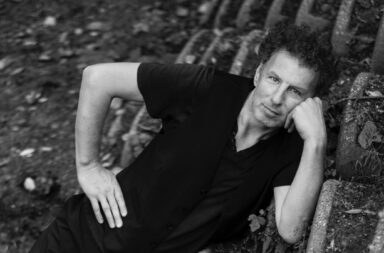
Andi Daiszler, President of the Daisler Association
I think they have been promoted as well as possible, but I would have a number of comments regarding the Timisoara 2023 platform, which is meant to be a kind of centralizer of communication of initiatives and this always comes with a number of advantages and disadvantages. I’ll start with the disadvantages.
For a cultural operator who has to submit notifications and reports for the Timisoara 2023 platform, any change in the programme becomes, basically, an opportunity for confusion for the public. Case in point: if, for example, an artist can no longer come, obviously, this is announced, first of all, on their own communication platforms, on the platforms of the event, of the programme managed by the cultural operator, but, equally, the public checks the information on Timisoara 2023, because that is the platform with the highest visibility, which, unfortunately, is managed, it seems to me, by too few people, who cannot take note of all the changes they receive. And then, you find yourself in a situation where you, as an operator, know that a certain artist can’t come and the programme changes, but the Timisoara 2023 platform still announces that the artist is coming and the programme is still on. And then the public became confused. Precisely because this was one of the provisions: communication must also be done on their platform. So, as I was saying, with the best of intentions, I think we are on our way, but implementation is never without unforeseen events.
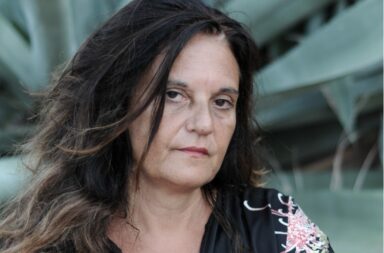
Ionel Mărginean, Executive Director of Diogene Cultural Association
The events were promoted through projects, which were promoted better than the programme. Opening and Closing and City Celebration were heavily promoted. There is a hard-worked centralisation on the website that helps the public discover the events that suit them. In many months you would not have anywhere else to house an artist. It happened a few times that I had to take them home (Timisoara 2023: national programme accommodates an artist). So at the national level it often didn’t make sense to do more awareness campaigning… Unless you also did a hotel. Has every Aunt Magdalena in Plopi heard of events to send her grandchildren to? Certainly not. It didn’t reach all those layers of the public we wanted to reach, but it also didn’t help if they only heard about the events, but if they heard about the PROGRAM. And the money from the ministry to promote the programme didn’t come. How well was the programme promoted? If we did a multiple choice test about objectives, values, territories, the vision of the Timisoara 2023 programme and asked teachers in schools, officials in public intuitions that fund, endorse or collaborate with cultural operators, invited artists, grant recipients… we would see how in fact the programme, (Why are we doing Timisoara 2023?) was not communicated.
Do you think that this year Timisoara has succeeded in laying the foundations for sustainable development?
Cristian Blidariu, associate professor and dean of the Faculty of Architecture and Urban Planning, Polytechnic University of Timișoara
I hope so. As I was saying, I think the impact would have been minimal if this year was about big shows in public squares, more John Malkovich type shows. Not that I have a thing against Malkovich. I like him and it’s good that he came, but I think the big win was precisely the network that was generated between different actors. And I say that because I saw in the Polytechnic University what an effervescence it was. During this year I got to know colleagues from the Faculty of Construction with whom I’m in the same building, who make theatre, who are producers of shows and with whom perhaps before we rarely talked, and now we are involved in a project.
I think that the kind of discoveries that the cultural capital has facilitated create long-term relationships, which I am convinced will be maintained, because networks of people have been created, who are of course all attached to institutions, but institutions can only function through strong relationships between people who have common interests.
I thought it was great that I, personally, discovered a lot of interesting people, with whom I now work and will work with in the future, and like me I am sure there are many others. On the other hand, I think the most visible effect is that the town has gained a bit of confidence. Timisoara has had a kind of blasé attitude towards its symbolic capital in recent years, in relation to other cities (Cluj, Sibiu, Bucharest), a blasé attitude that has been shattered. At this point it is clear that the community has entered a productive zone of thought. It is ready for other projects. Let’s see what money there will be post 2023, but I am confident that some things have changed for the better, in the area of perceptions, of courage, of approaching some projects.
Claudiu T. Arieșan, associate professor of the Faculty of Letters, Philosophy and History, West University, Timișoara
As I said, the basic word being cultural “heritage”, of course the impetus, the momentum, the many events that have enlivened the city, the region and sometimes had national echoes, have largely succeeded in achieving their purpose. But these things must have continuity. There were also partners in, shall we say, cultural adventures who argued that there were too many and too little events. In the cultural field my view is that there can never be too much. And the great goal was to coagulate all the creative energies of the people of Timișoara and their guests, with the idea of reaching a kind of summit that would lead to a healthy legacy. For example: there have been very good quality festivals that have now had a special edition, perhaps the best in recent years, of classical music, baroque music, romantic or pop music, or even folklore events and alternative rock festivals, not to mention jazz, because it is a brand of the west of the country. And the cultural institutions, i.e. the Opera, the National Theatre, the Philharmonic have also done their best to designate outstanding events throughout this year.
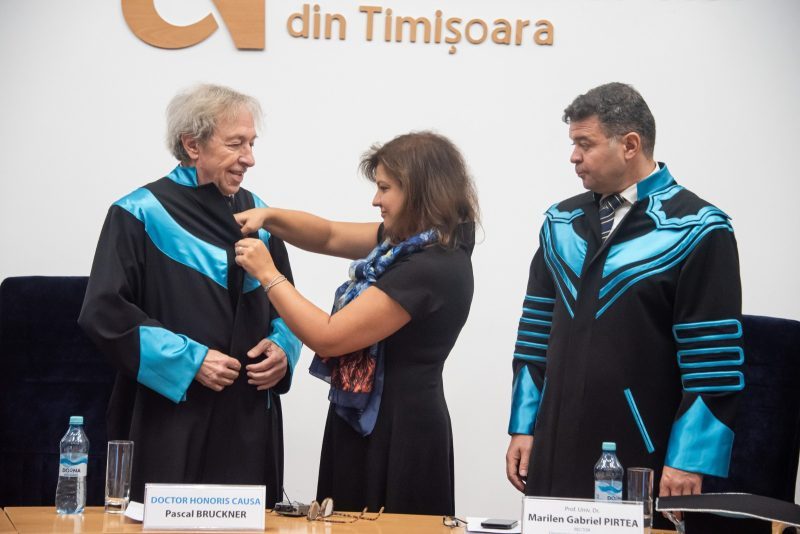
Let’s not forget that an actor like John Malkovich was present in Timisoara in an event-show, let’s not forget that there were guests who sometimes bridged decades, such as Lepa Brena, one of the most famous performers from former Yugoslavia, from today’s Serbia, who returned after an enthusiastic concert almost 40 years ago. And in this context we should also mention the extraordinarily important role of academic institutions. The Polytechnic University organised a series of remarkable conferences with major personalities, and then the Western University, well known for its projects such as La UVT culture is capital, dared to bring no less than five Nobel Prize winners to Timisoara, who were not only named Honoris Causa nominees, but also gave inspiring lectures, I’m referring to Orhan Pamuk, to Nadia Murad (Nobel Peace Prize 2018), I’m referring to writers like Pascal Bruckner or Peter Sloterdijk, all present this year in the corridors and auditoriums of UVT.
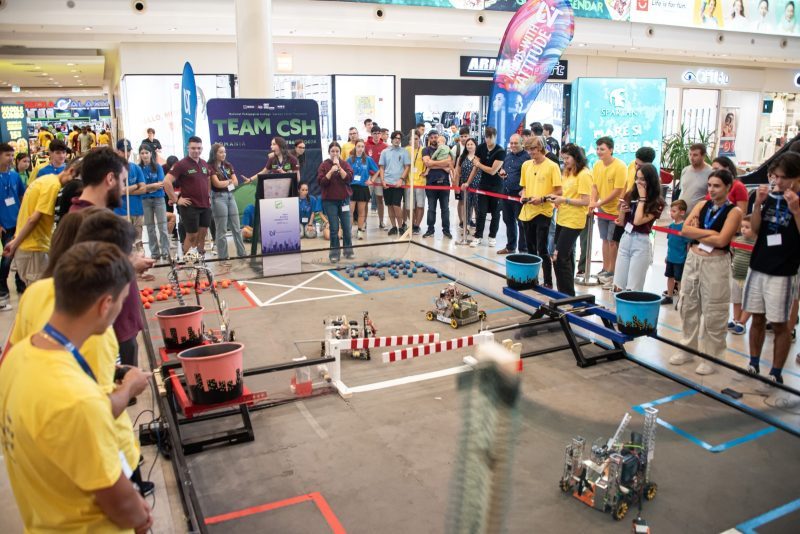
Also, a top project was that of the Timis County Council, in collaboration with the Timisoara County Library and the Great Books Club, to bring the best speakers of our current culture, or part of them, here in Timisoara. I am referring to personalities such as Adrian Cioroianu, Adrian Papahagi, Mihail Neamțu, Father Constantin Necula, Mr Mircea Dumitru. To the events held at the CJT’s multi-purpose hall, under the title of the Timisoara Conferences, which I had the pleasure of co-organising, we can add a very special event, the International Meeting of Orthodox Youth in the autumn, which also brought together, in a festive way, more than 5,000 young people. 000 young people, in the framework of special events, in which, once again, distinguished speakers, such as Mr. Ioan Aurel Pop, Fathers Stelian Tofană or Vasile Mihoc, Adrian Lemeni or Bogdan Tătaru-Cazaban, have also marked, each in their own specific way, this special year, whose legacies, we hope from the bottom of our hearts, will remain perennial.
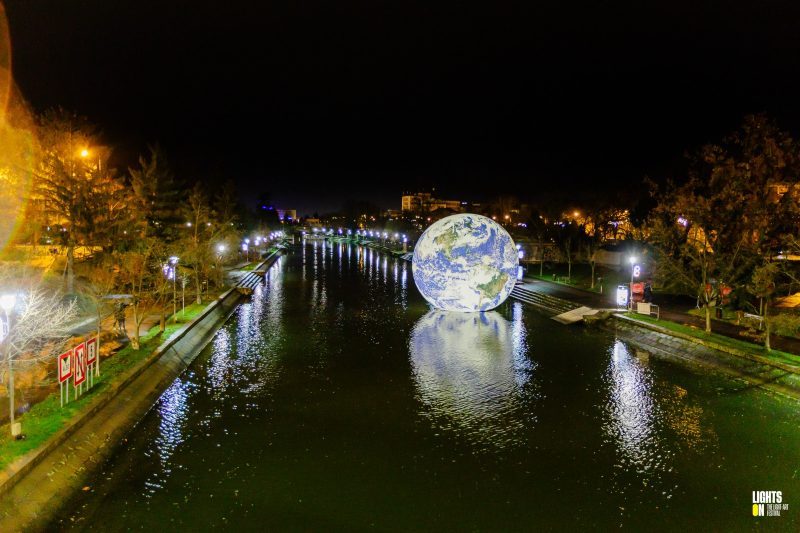
Andi Daiszler, President of the Daisler Association, founder of the “Lights On” festival:
I think Timisoara has woken up after a long time. My knowledge of the local ecosystem of cultural operators is not very extensive. I haven’t interacted with very many cultural operators here, but from the discussions I’ve had with people before, what we found this year was that for the first time they were asked to collaborate, not necessarily to compete with each other, but rather to implement larger projects together. I think one of the examples I could give was District 23, one of the big music events of the summer, which was co-organised by three music festivals, which used to happen independently. I mean, imagine Untold, with Electric Castle and Jazz in the Park joining hands and doing a mega-event together. That’s what happened. And I think it’s a good thing, because people got to know each other, learned to work with each other and that can be replicated in the years to come. Then comes the part about the public grant mechanism.
Also, I believe this is the first year that Timisoara is successfully implementing this kind of independent evaluation and reporting to a level that many other cities in the country have not experienced. This leads to a professionalization of the field, because we know that education and culture are areas that always suffer in Romania, and are usually the first victims of funding cuts and lack of importance. I think that the Timisoara exercise is very necessary and shows us the way forward.
Ionel Mărginean, Executive Director of Diogene Cultural Association
Sustainable development is not achieved in one year, nor in five, if we are talking about an ecosystem. Unfortunately, economically in Romania we have expectations when we invest in a company or a product. We want to receive the highest dividends from the first month, without having to invest. We want to invest in new equipment, but never in maintenance or in the people who use the equipment. Unfortunately there are expectations of this kind in the cultural area as well: „You got what you wanted in 2023. From now on, you’re on your own!“
I would say that the foundations have not been finished, but the digging has been done. We’ve started to put aside all sorts of myths, all sorts of pretensions and hubris. Many of us have also discovered what we want to do. But it’s been intense. Probably next year cultural operators will be able to look less hastily at what others have done, to think about the collaborations they have had, because this year has been a test of different partnerships. In 2024 we will see how many of the economic partners stay close to the cultural operators and whether they have started to differentiate between culture and entertainment, between education and advertising. Institutionally, there are local funding instruments that show every sign of being healthy and adaptable. Here are the foundations for sustainable development.
This journalistic material was made possible by a grant from Energie! Creative Fellowships, granted by the Municipality of Timișoara, through the Project Centre, within the Power Station component of the National Cultural Programme “Timișoara – European Capital of Culture in 2023”. The material does not necessarily represent the position of the Timisoara City Projects Centre and the Centre is not responsible for its content or how it may be used.
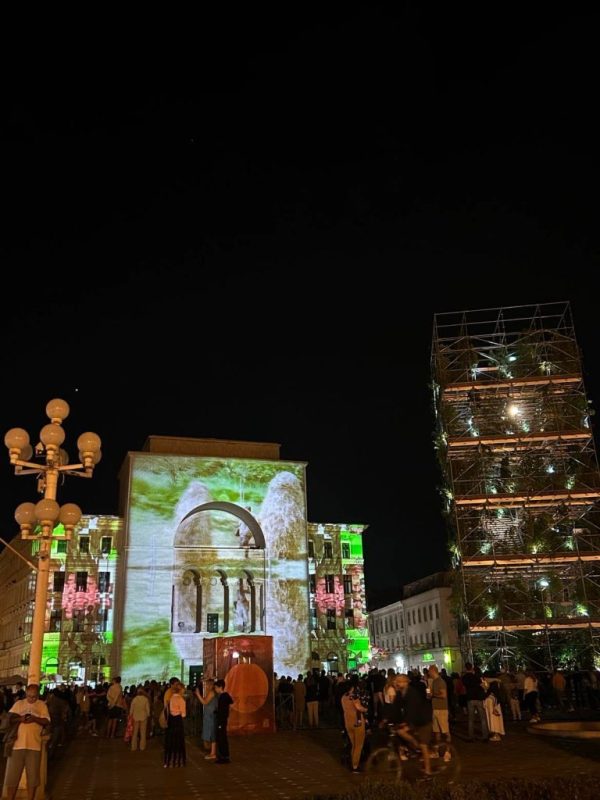
Photo cover: Lights on Romania, Daiszler Association