Theatre-Makers Respond: Andrei Măjeri, Antoaneta Cojocaru, Cosmin Stănilă, Ștefan Lupu and Eugen Jebeleanu
The Romanian programme of this year’s Sibiu International Theatre Festival (FITS) brings together artists from diverse theatrical backgrounds, from established directors to creators whose work has developed through acting, dramaturgy or performance. This diversity struck me as a fitting opportunity to bring the voices of Romanian directors to the fore, at a time when theatre is increasingly discussed in terms of visibility, ticket sales, social impact or the ability to tour festivals. In other words, theatre, like many other aspects of our lives in the 21st century, seems to be urged to become efficient, even though the government is allocating fewer resources and paying less attention to culture.
With this edition’s theme, Soul – a poetic word, yet somewhat overused – as my starting point, I sent a questionnaire taking the pulse of Romanian theatre to several directors participating in the festival. I sought to discover how theatre-makers perceive these challenges: what keeps a production alive after its premiere, what are today’s expectations from a director in Romania, which professional clichés they continue to grapple with, and how (if at all) the practice of directing is changing today.
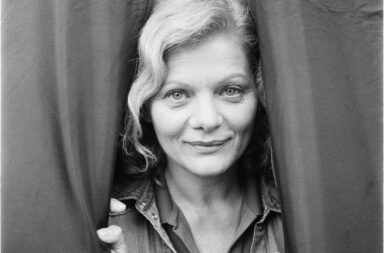
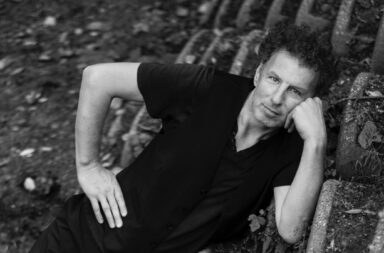
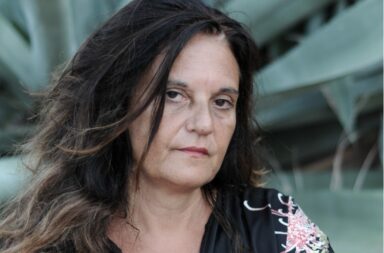
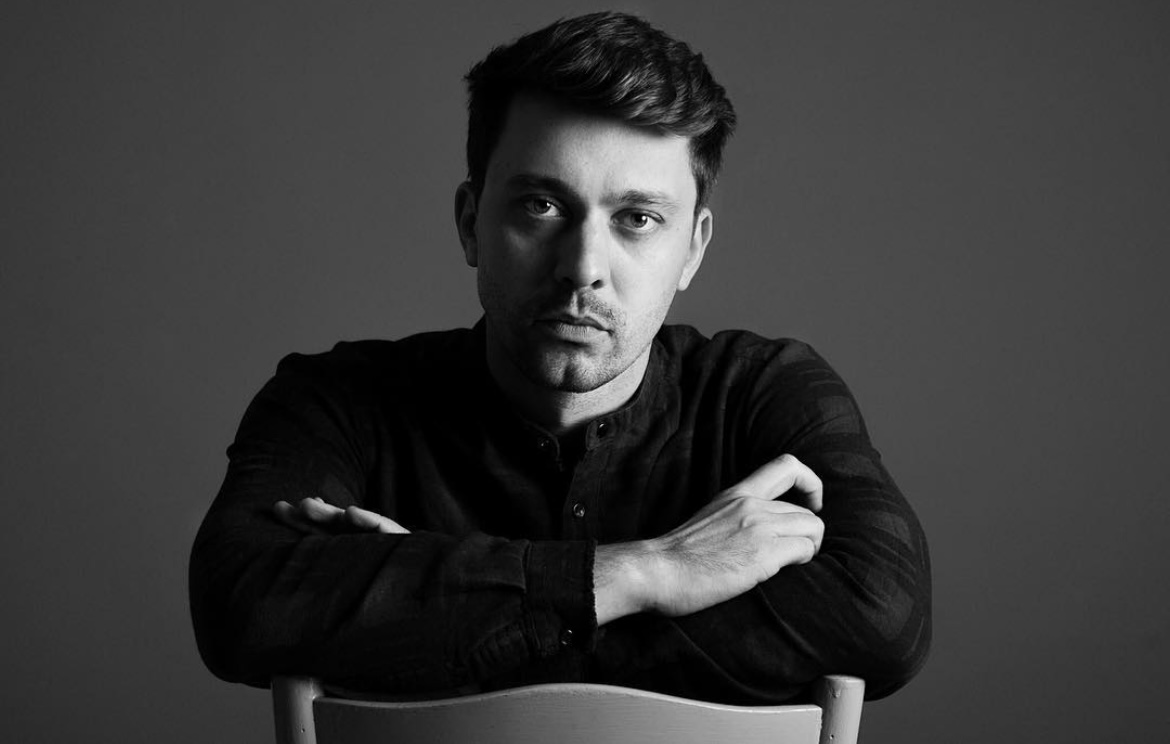
The following theatre makers, who have each their own take on the title of director but all have first-hand experience of the Romanian theatre scene, generously accepted my invitation: Andrei Măjeri, Antoaneta Cojocaru, Cosmin Stănilă, Ștefan Lupu and Eugen Jebeleanu.
1. This year’s FITS theme is “Soul”. What place does emotion still hold in contemporary theatre, and what keeps a production “alive” and relevant after its premiere?
Eugen Jebeleanu: A production remains alive after its premiere as long as it is supported by the production company and the theatre that created it. Many productions, unfortunately, are lost and even “die” due to a lack of programming and a lack of recurrence and visibility. I believe that emotion still plays an important role in theatre. All the same, an analytical and lucid approach to the themes we address in our shows is just as relevant. In relation to the theme of this year’s festival, emotion naturally finds its place, and perhaps it is even necessary to return briefly to one of theatre’s fundamental purposes: that of reflecting society and, at the same time, producing a sense of catharsis in the audience.
Andrei Măjeri: Emotion is central to any work of art. In contemporary theatre, I believe we can speak of new thematic territories, of political and/or autobiographical explorations, but all creators want the result to reach the hearts of the audience. The director and performers have a duty to remain creatively involved in productions that have been running for some time. It’s a personal challenge to keep that production alive and thought-provoking after you’ve reaped the rewards.
Antoaneta Cojocaru: I believe that emotion remains the most important component of a good theatre production. And I don’t find that debatable at all. I think people come to the theatre precisely for this reason, whether they realise it or not: to encounter their own soul and the souls of others. But genuine emotion is also the hardest thing to achieve in theatre, because it is a combination of elements. Perhaps that is precisely why, when we cannot achieve it, we delude ourselves that there is something higher. Emotion means aliveness, truth, openness and, above all, mastery. As long as our devotion to the artistic act does not wear thin, emotion can always be reborn. Attention to detail often makes all the difference. So does the attitude towards theatre, understood as life in constant motion, not merely as an illustrative commentary.
Ștefan Lupu: The role of emotion is very important in contemporary theatre, as in any form of theatre or performance. I think it is the thing I strive for most when I work. I like to create emotion and work from emotion, as a creator, but I also like to feel it, as a spectator. A performance remains alive and relevant after its premiere if it is carefully maintained. And that depends on each company, on the theme and message of the production, but also on the way the artists and technical team approach their work. It takes a great deal of attention to keep the production in the form in which it was created at the premiere – and not just to maintain it, but also to improve it over time.
Cosmin Stănilă: I would place emotion at the top of the hierarchy of artistic values that I appreciate in a theatre production (and in any work of art). More often than not, I start from it in everything I do and I look for it in everything I see. Even the intellectual or political debate that a performance might spark within us or with others, I believe, draws on emotion – indignation is an emotion, helplessness, too. Revolutions and manifestos bring their own emotions as well.
As for how a production stays alive, I don’t want to point any fingers, but I think it has a lot to do with how the actors relate to it (as an actor myself, I take responsibility for my words). If they remain curious, if they don’t think they already know it too well to be surprised by it, if they’re open to diving into new waters each time, then the performance stands a chance of retaining its vitality. Of course, it is important that the text, the situations and the lines have something new to offer even at the hundredth performance, that they can reveal something, that they can evoke a meaning not discovered until then. And a solid stage structure helps too, within which the actor can discover freedom.
2. Bearing in mind the expectations of theatres, artistic teams, audiences, etc. what do you feel is required of a director in Romania today? What do you refuse to comply with from this list?
Eugen Jebeleanu: I believe and hope that a director is expected to have vision, courage and the strength to say things as they see them, with conviction, but also with constant questioning of the current socio-political environment. I believe a director must be a person who guides and who offers a critical eye of society and the contemporary world. I believe they also need that touch of madness, daring and impertinence that allows them to surprise, to break conventional or classical codes and to continue seeking new forms, in a perpetual dialogue with the substance. Form must be the substance that comes to the surface.
Cosmin Stănilă: I must make a disclaimer. Beyond Forgetting is the first and only theatre production I have directed so far. So my experience with theatres from this perspective is rather limited. As far as I can tell, entertainment is often required, as is flexibility, the production of plays that are digestible in terms of length and meaning, the ability to adapt during crisis and a great deal of lucidity. Can some of these qualities mean a compromise? Yes, but I think compromise is inevitable when working in a team. Can they mean a de-radicalisation of the production? Probably, given that many of these demands stem from the desire to remain commercially relevant.
Ștefan Lupu: I think every theatre wants a creative, attentive and well-organised director. An artistic team wants a director they can trust: passionate, capable of forging a strong team and inspiring it to go to the ends of the earth for any idea, any ‘crazy’ vision. What I refuse to accept is seeing those expectations replaced by hypocrisy, imposture, ignorance, inexperience, or lies.
Antoaneta Cojocaru: First of all, I do not consider myself a director in the true sense of the word, although I have been putting on productions for a long time, perhaps as a tribute to the important directors I have worked with. But I know that I have done everything in my power to be more than just a ‘traffic controller’.
False demands are linked to the temptation of fast-food theatre, of recipes and shiny packaging that contain very little. The danger is that these things will become the norm for managers too. Personally, I refuse to put on shows in a rush; I refuse to be forced to let go of collaborators I consider valuable; I refuse to downplay the essential role of other departments. I don’t believe people are replaceable or that we’re all experts at everything. I automatically reject weak scripts or scores.
The real requirements are linked to substance, to genuine artistic exploration, to openness towards the company, to the value of the endeavour and to a mandatory artistic standard. Especially since, on a social level, spiritual needs are growing, as are loneliness and boredom. We will always need to talk about love, joy and beauty. After all, these are the only driving forces that keep us moving forward in life.
Andrei Măjeri: I reject the idea of success as something guaranteed, something that comes with signing a contract. Such thinking is counterproductive and entirely unartistic. There is a lot of pressure (even from the audience, not just the producers) on creators: to repeat themselves, to revisit established formulas. It is important to see what is becoming rigid within us and to fight against these aspects.
3. What is the cliché about directing that you encounter most often in Romania, and what do you think it reveals about how theatre is understood more broadly in society?
Andrei Măjeri: The expectation of perpetual brilliance, the need to please everyone with awards – I think, for example, that there should be fewer nominations at the UNITER Awards – but the main cliché remains the image of the director as visionary, even 35 years after the fall of communism. At the level of society, theatre is not a major phenomenon, because access to culture in our country is also limited. We can speak of certain points of attention around the theatrical phenomenon at particular moments, but education and culture nevertheless remain the step-sisters of this society.
Antoaneta Cojocaru: I see several clichés:
– “Sold out” is not an indicator of value at all, but rather a herd instinct, with very little critical thinking behind it, which only does good to managers’ egos on Facebook.
– “Let’s make performances only with young people” seems very wrong to me, because these young people have no one from whom to learn the craft in concrete terms. As a result, the level of performances drops dramatically, and the stage risks becoming a showcase rather than a place of craft.
– “We have to do something different” can become an egocentric and false path, one that cancels out and divides. Everything has already been invented. I believe we should instead be inclined towards personal growth, be sincere and honest in our artistic undertaking, and speak about what hurts us.
– “Theatre is for everyone.” Nothing is for everyone. That is precisely why theatre must preserve its bearing and rank, rather than lower itself in the name of common understanding.
– “There is no need for so much set design.” It depends on the proposal in question, on the level at which we build it, and on what it is for.
– “Laboratory theatre” does not mean performances thrown together in haste and experiments with nothing at stake, but, on the contrary, precious essences reached through a great deal of work.
– “Classical texts are outdated.” Classical texts are very hard to stage. They require time and space, they are a real test, and they involve a great deal of risk. But they help you evolve, and they are valuable and rich, both for artists and for audiences.
Ștefan Lupu: I do not know whether I can name one cliché in particular, but I do think there is sometimes too little trust in artists and in their ideas. It seems important to me that we do not allow ourselves to be influenced by other people’s experiences, but take people as they are and try to collaborate in a real way. Everyone should understand their status and responsibilities, but without forgetting that we are people and artists, with doubts, searches and the possibility of making mistakes. Perhaps this is where a healthier working relationship can begin, one that is ultimately visible both in the quality of the performances and in the relationship with the audience.
Cosmin Stănilă: There is that joke: what is the difference between God and a director? God does not think he is a director. So yes, I do think there is a stereotype, a demiurge complex among directors. And it probably comes from the great power they have in terms of artistic initiative. They generate projects, they are the leaders of the artistic team and they make the most important decisions; the actor listens to them, most of the time; they are, in a certain sense, the authors of the performances, even if many do not accept the terminology. I think this means we are still in a culture in which the director is very important. There are star directors, constantly sought out by audiences, whose performances are always sold out. Of course, there are also playwrights and actors who are very loved, but in the area of “art theatre”, directing matters more in terms of how the performance ultimately comes to look.
Eugen Jebeleanu: The cliché I see in our small world of theatre people is that of the director-god. The director should not have a status superior to the team. He is, as I was saying, a guide, but he should neither claim nor be granted a kind of supreme power. In Romania, we are still in a theatre bubble in which the director dominates, and I think this can be changed through theatre and through art made horizontally, so that each member of the team can find their role, importance and dignity in their own proposals.
4. What does Romanian theatre produce very well at the moment, but does not yet know how to recognise as an asset or strength?
Andrei Măjeri: Diversity. It is a colourful theatrical environment. By contrast, it produces far too little friendship and too little decent working climate. I notice that over the past decade the number of people writing for the stage has visibly increased, which is extremely necessary in a living theatrical universe. Young playwrights and young directors – women directors included – could enter world theatre more decisively.
Antoaneta Cojocaru: Romanian theatre, when it does not lie and when it does not pretend to be something else – Broadway, the Schaubühne and so on – has a certain strength and a certain sadness interwoven with raw humour, and these are very poetic. Its sap is drawn from old essences, and that should not be cast aside. Romanian theatre still has important names in acting and directing, on whom it relies and from whom it still has things to learn. It is not enough to have only the “new energy” on stage. It is precisely the performances conceived outside the new box that seem valuable to me.
Ștefan Lupu: Romanian theatre and the Romanian artist are adaptable, strong, willing to work in very different contexts, with very different resources and conditions. I think there is a lot of talent in Romania, and that is something truly powerful. Romania is a country that can inspire any artist, if you open your eyes, perceive, understand, then translate, transform and create. On the other hand, we also need to adopt models of good practice, because there is always something we can improve and build.
Cosmin Stănilă: Young directors, set designers, choreographers, actors and playwrights. I think some very cool generations are taking shape, in no way inferior to the leading figures who made Romanian theatre known abroad a few decades ago.
Eugen Jebeleanu: I do not think Romanian theatre is in a very good period at the moment. I do not think it necessarily has an undiscovered or unseen asset or strength that it is not exploring enough. Perhaps, if I were to name one strong point, one quality that we still do not appreciate enough, it would be the existence of theatre companies, of actors and actresses. I think we have enough talent, enough involvement and dedication, enough names, but also a diversity of bodies, presences and energies among today’s actors and actresses, and we should make better use of them.
5. How do you think the approach to directing in Romania is changing (if it is changing) when theatre is expected to be relevant, saleable, present in festivals, responsive to its audience and artistically coherent?
Andrei Măjeri: Theatre has always had to be all of the above; it’s just that we have the feeling we’re living in more turbulent times. That’s not true. The very same audience members who praise you today are ready to ‘crucify’ you tomorrow if you don’t deliver what they want. However, what is visibly changing is the growing number of female directors, both in drama schools and within the professional theatre system. And that is extremely important for the dynamics of our bubble.
Eugen Jebeleanu: Public theatre, of which I am also a part – state theatre, as we also call it – must not be marketable, under any circumstances. The moment it becomes a cultural product focused on sales, it loses its primary meaning. It must retain the message that a director or a team wishes to convey, and remain consistent with it, keeping its backbone.
Furthermore, theatre should not be produced at the audience’s request or based on their feedback. “There’s no accounting for taste” is a false expression: taste can be cultivated. So we are responsible for ensuring that audiences receive relevant and important performances, firmly rooted in both Romanian and universal reality. This is where coherence comes from: from the clarity of our paths and our approach, from the fact that we know what the intention is, why we do theatre, why we take to the stage, why we have chosen one text over another.
Antoaneta Cojocaru: A deeper exploration of humanity and the society in which we live would naturally meet all these demands, without any extra effort. The same goes for a careful and serious approach to the craft. But the theatre-maker has become a sort of sales-oriented project manager, and that is very serious. At the same time, managers and directors are sometimes far too harsh or unsuited for such roles and, more often than not, overwhelmed by the demands of local councils and the expectations mentioned above. Hence the gulf between theatre companies and directors. Sometimes it is difficult to keep a clear head and navigate the many egos involved, especially if you are a woman.
Ștefan Lupu: Things can change if there are more good teachers to teach directing, or directors who become teachers and pass on the tools, experience and secrets of this craft to future directors. I believe this could improve the quality of directors’ training and, by extension, the quality of productions. They would become more relevant, more significant, and Romanian theatre could take a more visible direction and evolve.
Cosmin Stănilă: It seems to me that the relationship with the actors is changing a little. I feel that directors are starting to be more considerate towards them, to treat them as partners, to treat them with more respect; at least that’s how I’ve felt from my experience as an actor. As for styles and methods, I’m not sure what to say. It seems there’s less theatre that pretends the audience isn’t in the room.
Quick-fire questions:
Which word would you remove from the discourse on theatre for a while?
Andrei Măjeri: interim
Antoaneta Cojocaru: relevant (it’s a word that doesn’t actually mean anything, but hides a lot of frustration)
Cosmin Stănilă: mandatory
Ștefan Lupu: interesting
Eugen Jebeleanu: award
Which word would you bring back into the discussion?
Andrei Măjeri: relevance
Antoaneta Cojocaru: value
Cosmin Stănilă: need
Ștefan Lupu: faith (artistic creed; credo – creation)
Eugen Jebeleanu: relevance (I think it is a word that often disappears from our concerns: the relevance of doing something)